Crypto market crash, what the sell-off means for long-term holders
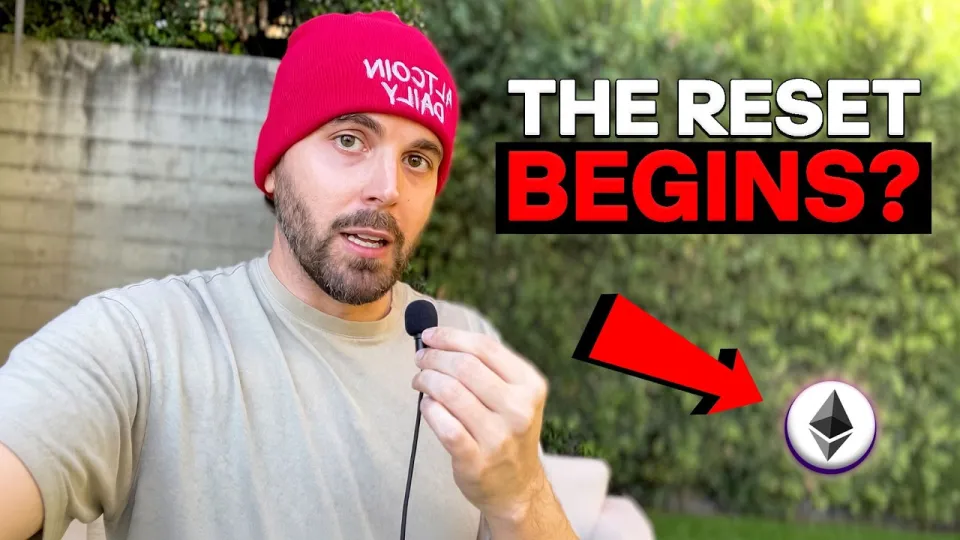
Video: Crypto Investors Are In Serious Trouble (market crash)
Need articles like this for your video? They help promote it on YouTube and Google — order them in the Telegram bot @sat_sit_bot. It writes articles around your video, embeds the video and publishes them on popular niche websites (no ads). Your first 50 articles are free.
· based on the channel Altcoin Daily
A crypto market crash is a sharp, broad decline in Bitcoin and altcoin prices that forces leveraged traders to sell and leaves long-term holders deciding whether to buy more. In the Altcoin Daily breakdown, the trigger for concern is arithmetic rather than panic: Bitcoin traded at $80,707 on October 24, 2026, and its five-year compound annual growth rate works out to just 5.78%. For anyone who bought the top of the last cycle expecting triple-digit annual returns, that number is the real problem — and it is why the channel frames the moment as serious trouble rather than a routine dip.
The practical takeaway is that a crash changes the entry price, not the thesis. If your position was sized for a five-year horizon and you are not using leverage, a lower price is an opportunity to average down; if you borrowed to buy, it is a margin call. The Altcoin Daily team also points viewers to its merch store for channel supporters.
Why a 5.78% five-year CAGR is the real story
A 5.78% annualized return over five years is roughly what a savings account or a short-dated government bond pays, and that comparison is what makes the current drawdown feel like trouble. Bitcoin at $80,707 in October 2026 is still far above where it traded five years earlier, but the compounding math means an investor who bought at any point in the last five years and held has earned very little per year for the risk taken.
Three things follow from that number:
- The risk premium has compressed. Crypto no longer automatically beats safer assets over a five-year window, so the case for holding has to rest on future adoption, not past performance.
- Entry price dominates outcomes. A buyer at a cycle high needs a much larger rally to break even than a buyer during a crash, which is why averaging down matters more than timing the exact bottom.
- Leverage is the killer. A 5.78% CAGR cannot service borrowed money in a volatile asset; forced selling during a crash converts a temporary drawdown into a permanent loss.
What the crash actually looks like on the chart
A market crash in crypto usually arrives as a fast leg down followed by a long, boring base, and the video's framing matches that pattern. Bitcoin printing lower highs within a cycle while still making higher highs across cycles is exactly the kind of structure that frustrates holders, and viewers raised the contrast with Ethereum, which has not delivered the same multi-cycle pattern.
That divergence is a useful diagnostic. When Bitcoin makes higher highs every cycle but individual altcoins do not revisit their old peaks, the market is consolidating around the largest asset and starving smaller ones of liquidity. The result is a crash that looks uniform in the headlines but is very uneven in portfolios: a Bitcoin-heavy book is down, while a book of 2021-era altcoins may never recover regardless of what Bitcoin does next.
The typical questions viewers ask during a sell-off
The questions that come up most often in the comments are about survival and conviction, not about chart patterns. The most upvoted theme is whether the channel itself will still be publishing next cycle or will retire after this bull run completes — a question about the durability of the people giving the advice, not just the assets. The second recurring request is for the channel's actual altcoin portfolio list, because viewers want to compare holdings rather than hear general principles.
Solana draws its own cluster of questions, including a widely repeated target of $1,000 SOL by 2028 and requests for Tom Lee's view on SOL. Another thread asks what would have to happen for a treasury-style company such as BMNR to start selling Ethereum, which is really a question about forced sellers. The honest answer to all of these is that no one knows the next cycle's leader in advance, and anyone who publishes a fixed list should be read as expressing a view, not issuing a guarantee.
How long-term holders should respond to a drawdown
A drawdown should be met with a written plan rather than a reaction, because decisions made during a crash are usually the most expensive ones. Viewers describing their own approach converge on the same handful of rules, and they hold up well against the 5.78% CAGR reality:
- Check in less often. One commenter noted not having logged in to check prices for two weeks, which is a reasonable cadence for a long-term position and removes the temptation to trade the noise.
- Keep dry powder. Saving cash specifically for a large dip turns a crash from a threat into a scheduled buying event.
- Average down in tranches. Buying in several smaller lots instead of one lump sum avoids committing everything before the bottom is in.
- Separate living costs from speculation. Several viewers said they would rather improve their living situation now than add to positions, which is a legitimate allocation decision, not a failure of conviction.
- Ignore the manipulation narrative. Calling every red candle 'normal manipulation' feels good but changes nothing about position sizing.
Where the Altcoin Daily links lead
The only link promoted in this video is the channel's own store, which sells branded merchandise for supporters rather than offering any financial product, signal service, or registration.
- Altcoin Daily merch shop — the channel's official merchandise store.
There is no exchange referral, no paid group and no token sale attached to this video, so nothing in the description should be read as investment advice.
Conclusion
A crypto market crash is a price event, and the uncomfortable number behind this one is Bitcoin's 5.78% five-year CAGR at $80,707 on October 24, 2026 — a return that barely beats cash. Altcoin Daily's breakdown argues that the correct response for a long-term holder is to keep position sizes survivable, avoid leverage, and treat lower prices as scheduled buying opportunities rather than emergencies. Viewers' own questions — about the channel's longevity, its altcoin list, and Solana's path to $1,000 — show that conviction is the scarce resource in a drawdown, not information. If you want to support the channel whose analysis you are following, the Altcoin Daily merch store is the place to do it.
Key takeaways
- Bitcoin traded at $80,707 on October 24, 2026, with a five-year CAGR of just 5.78% — below the returns many investors expected.
- A 5.78% CAGR over five years roughly matches a savings account, which is the core of the 'serious trouble' framing in the video.
- Altcoin Daily's take is that drawdowns are a buying window for long-term holders, not a reason to sell.
- The most-asked viewer question is whether the channel will still be around next cycle or retire after this bull run.
- Viewers also want the channel's actual altcoin portfolio list and its view on Solana, including a $1,000 SOL price by 2028.
Source: Crypto Investors Are In Serious Trouble (market crash) · Markdown version
Questions & answers
Is crypto crashing right now?
Bitcoin was trading at $80,707 on October 24, 2026, which is a substantial drawdown from prior cycle highs and is what the video calls a market crash. Whether it is a crash or a correction depends on your entry price: a five-year holder is still up, while a buyer near the top is deeply underwater. The label matters less than whether your position can survive another leg down.
What does a 5.78% five-year CAGR mean for Bitcoin investors?
It means Bitcoin's annualized return over the last five years is roughly in line with a savings account, despite far higher volatility. That compresses the risk premium and makes the case for holding depend on future adoption rather than past performance. It also means leverage is especially dangerous, since borrowed money cannot be serviced by that return.
Should I buy more during a crypto crash?
Only with money you will not need for several years and ideally in tranches rather than a single lump sum. Long-term holders in the comments describe keeping dedicated cash for large dips and averaging down, while others prioritize their living situation over adding to positions — both are valid. Avoid buying with leverage, because a further drop forces a sale at the worst price.
Will Solana reach $1,000 by 2028?
That is a widely repeated viewer target, not a forecast the channel endorses, and it requires a very large multiple from current levels within roughly two years. Solana's outcome depends on network usage, liquidity conditions and how the next cycle rotates out of Bitcoin. Treat any specific price target as a scenario to size positions around, not a promise.