Crypto, Brian Jung's Plan to Make Millions in the Next Cycle
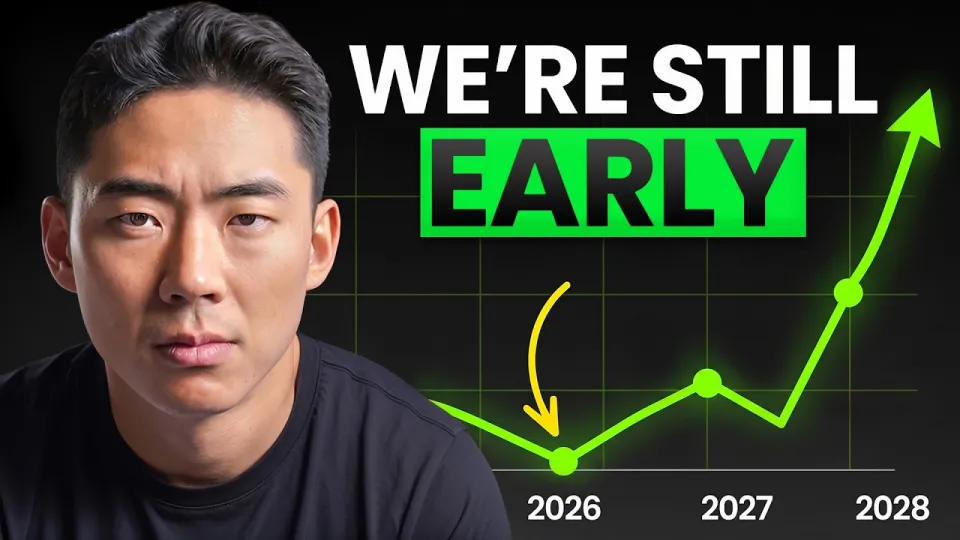
Video: my plan to make millions in crypto 2027
Need articles like this for your video? They help promote it on YouTube and Google — order them in the Telegram bot @sat_sit_bot. It writes articles around your video, embeds the video and publishes them on popular niche websites (no ads). Your first 50 articles are free.
· based on the channel Brian Jung
Crypto is a market where the plan matters more than the prediction: Brian Jung's video «my plan to make millions in crypto 2027» lays out why he stays bullish, which narratives he expects to drive the next cycle, and how he structures his own positions. The short answer to what the plan contains: a narrative-first framework, strict position sizing, and a refusal to treat any single coin as the whole trade. Access to his research and tooling is sold through the Kaizen Pro waitlist on Whop, which he links first in the video description.
What Brian Jung actually promises, and what he does not
Brian Jung presents a plan, not a guarantee: the video is structured as a thesis with an execution layer, and it explicitly carries a disclaimer that the content is educational and not financial advice. That framing matters, because the loudest skeptical comment under the video is a version of «same thing they said last cycle and I lost everything» — a reminder that a bullish framework without risk control is just leverage with extra steps. Jung's outline splits into three parts: why he is bullish on crypto, the narratives driving the next cycle, and his plan to make millions this cycle. There is no price target for Bitcoin, no date for a cycle top, and no promise that altcoins repeat their previous returns.
Why the bull case still holds for crypto
The bull case rests on adoption and market structure rather than on a single chart pattern: crypto keeps absorbing capital through ETFs, regulated venues and institutional products, and each cycle has added a new group of buyers. Jung's argument in the first block of the video is that the asset class is still early relative to the size of global capital markets, and that drawdowns are the price of admission rather than evidence the thesis is dead. The counterweight is honest: a market that can go up can also go down, and the comment section says so bluntly. The practical takeaway is that being structurally bullish and being positioned for a 40% drawdown are not contradictory — they are the same plan written at two different time horizons.
The narratives driving the next cycle
Narratives rotate faster than fundamentals, so the video's middle section maps the themes Jung expects to attract capital. The recurring candidates in this discussion are:
- Bitcoin as the reserve asset. ETF flows and corporate treasury adoption keep BTC the first thing institutional money touches.
- Ethereum and the L2 economy. Staking yield, restaking and rollup activity give ETH a cash-flow story that most tokens lack.
- Altcoins with real usage. Jung has repeatedly flagged SUI among newer L1s, and viewers noticed the mention — a sign that attention in the altcoin segment is shifting toward chains with active developers.
- Consumer and fintech rails. Brokerage-style crypto products, including names like Robinhood, keep pulling retail users in through familiar interfaces.
- Regulatory clarity. One viewer argues that rejection of a CBDC-style model is better for crypto than bank control of the rails — a reminder that policy headlines are themselves a narrative.
The honest caveat: narratives are only visible in hindsight. The same themes that look obvious in a bull market look like cope in a bear market, which is why the plan needs a sizing layer.
How the plan is built: sizing, not prophecy
The execution layer is where most retail plans fail: the difference between a thesis and a portfolio is position size. Jung's approach, as outlined in the video, is to allocate across a core and a satellite book rather than to concentrate in one token. In practice that means:
- a core position in Bitcoin and Ethereum that you are willing to hold through a full drawdown;
- a satellite allocation to higher-beta altcoins, sized so that a total loss does not damage the core;
- a cash or stablecoin reserve to buy dislocations instead of being forced to sell them;
- a written exit rule — partial profit-taking into strength rather than a single «top» call.
Viewers often ask whether 50% in altcoins is reasonable. It can be, but only if the other 50% is genuinely defensive and the altcoin half is diversified across narratives rather than piled into one ticker. The plan to «make millions» is really a plan to survive long enough for a large position to compound.
Common objections from the audience
Skepticism in the comments is useful because it repeats every cycle: the plan sounds bullish, the market has burned people before, and timing a top is impossible. Three objections deserve direct answers. First, «you are always bullish» — a structural bull can still be wrong on timing, which is exactly why sizing and reserves exist. Second, «it could go up or it could go down» — true, and that is why the plan defines what happens in both cases instead of predicting one. Third, «the top will be in 2029» — cycle-length theories are guesses dressed as calendars; the plan should work whether the peak arrives early or late. None of these objections invalidate a narrative framework, but each one argues for smaller bets and clearer exits.
Useful links
- Kaizen Pro waitlist on Whop — access to Brian Jung's research product.
- Free crypto market report newsletter — weekly market notes by email.
- Brian Jung on X and Instagram — the author's social channels.
- Risks & Disclaimers — the full risk document referenced in the video.
The bottom line
Brian Jung's crypto plan is a framework, not a forecast: stay structurally bullish, allocate by narrative, keep a defensive core, and size the speculative part so a bad cycle cannot end the game. The video is worth watching for the narrative map, but the durable part is the discipline around position sizing and exits. Treat the numbers as an example of a method, not as advice for your own portfolio, and remember that the author states plainly that the content is educational. If you want the author's own research and tools, the Kaizen Pro waitlist is the entry point he links in the description.
Key takeaways
- Brian Jung's thesis: crypto is still early, and the next cycle is driven by narratives, not by a single coin.
- The video outlines three blocks: why he is bullish, the narratives driving the next cycle, and his personal plan to make millions.
- Key narrative candidates named in the discussion include Bitcoin, Ethereum, altcoins and newer L1s such as SUI.
- Jung frames the plan around position sizing and risk limits, not around all-in bets on one asset.
- Access to his research and tools is offered through the Kaizen Pro waitlist on Whop.
Source: my plan to make millions in crypto 2027 · Markdown version
Questions & answers
Is Brian Jung's crypto plan financial advice?
No. The video and its description state that the content is for educational and entertainment purposes only and is not financial advice. Jung is not acting as a financial advisor, and viewers are told to do their own research and consult a professional before investing.
Which narratives does the video highlight for the next cycle?
The discussion centers on Bitcoin as the institutional reserve asset, Ethereum and its L2 economy, altcoins with real usage such as SUI, consumer fintech rails like Robinhood, and regulatory clarity as a market driver. The point is that capital rotates between themes rather than moving in one block.
Is putting 50% of a portfolio into altcoins reasonable?
It can be, but only if the remaining half is genuinely defensive and the altcoin allocation is spread across several narratives instead of one token. A 50% altcoin book with no cash reserve leaves no room to buy a drawdown, which is where most retail plans break.
Why do some viewers distrust bullish crypto plans?
Because previous cycles produced loud bullish calls followed by deep losses, and a framework without position sizing and exit rules does not protect anyone. The useful response is to separate the thesis from the execution: define what you hold through a drawdown and what you cut.